My role
Co-lead redesign for the website and booking system of Norway’s largest manual therapy chain.
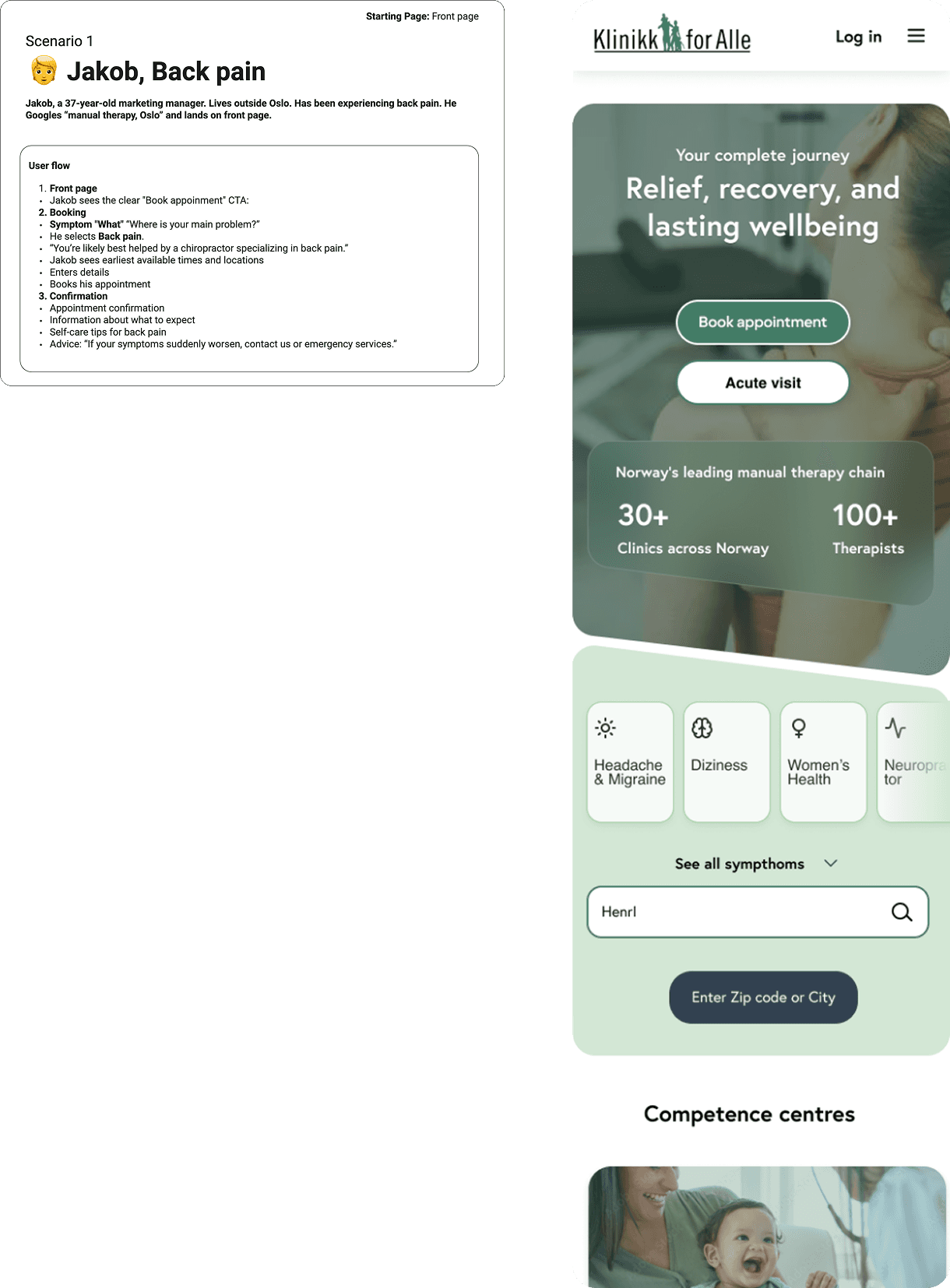
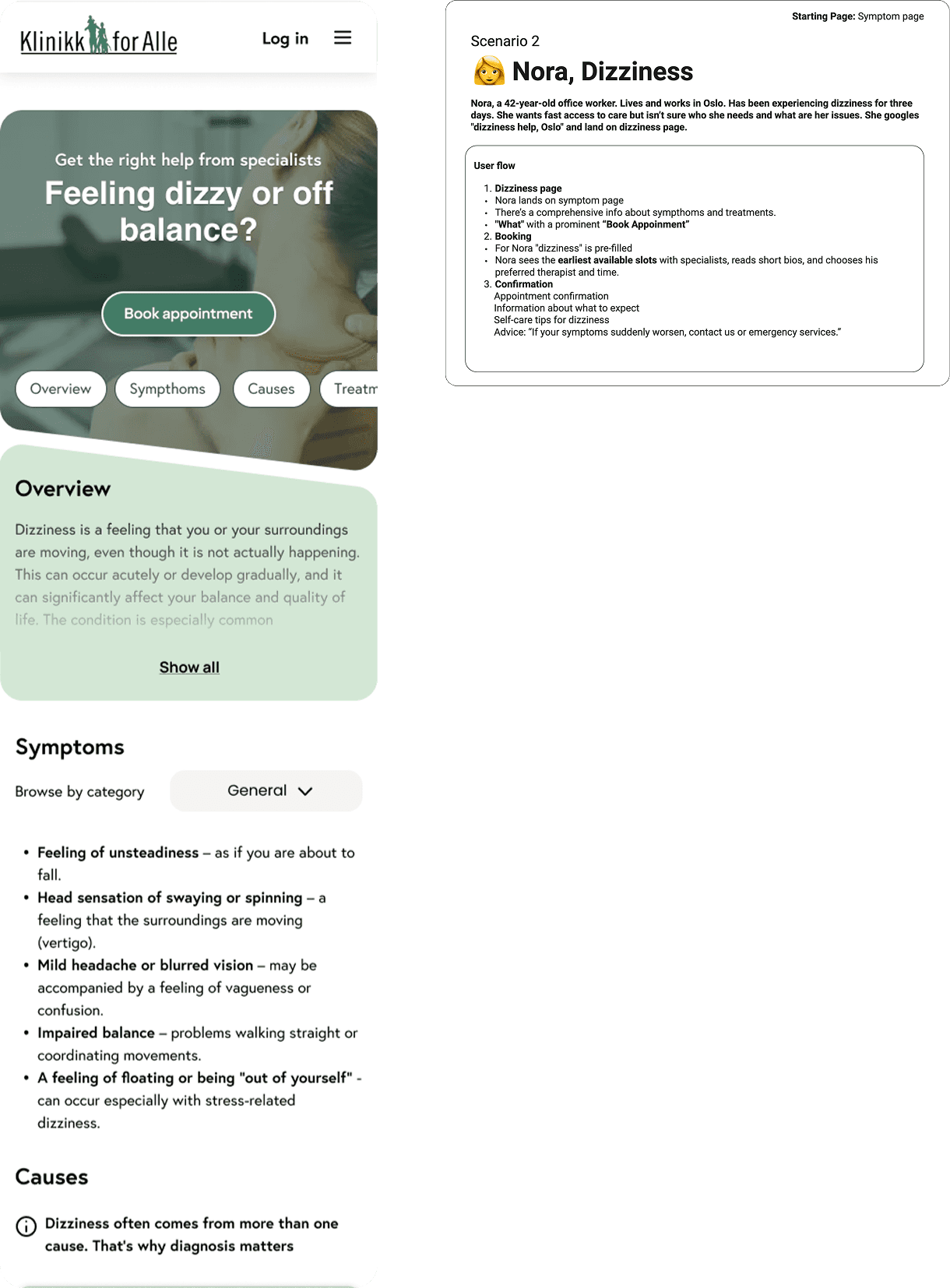
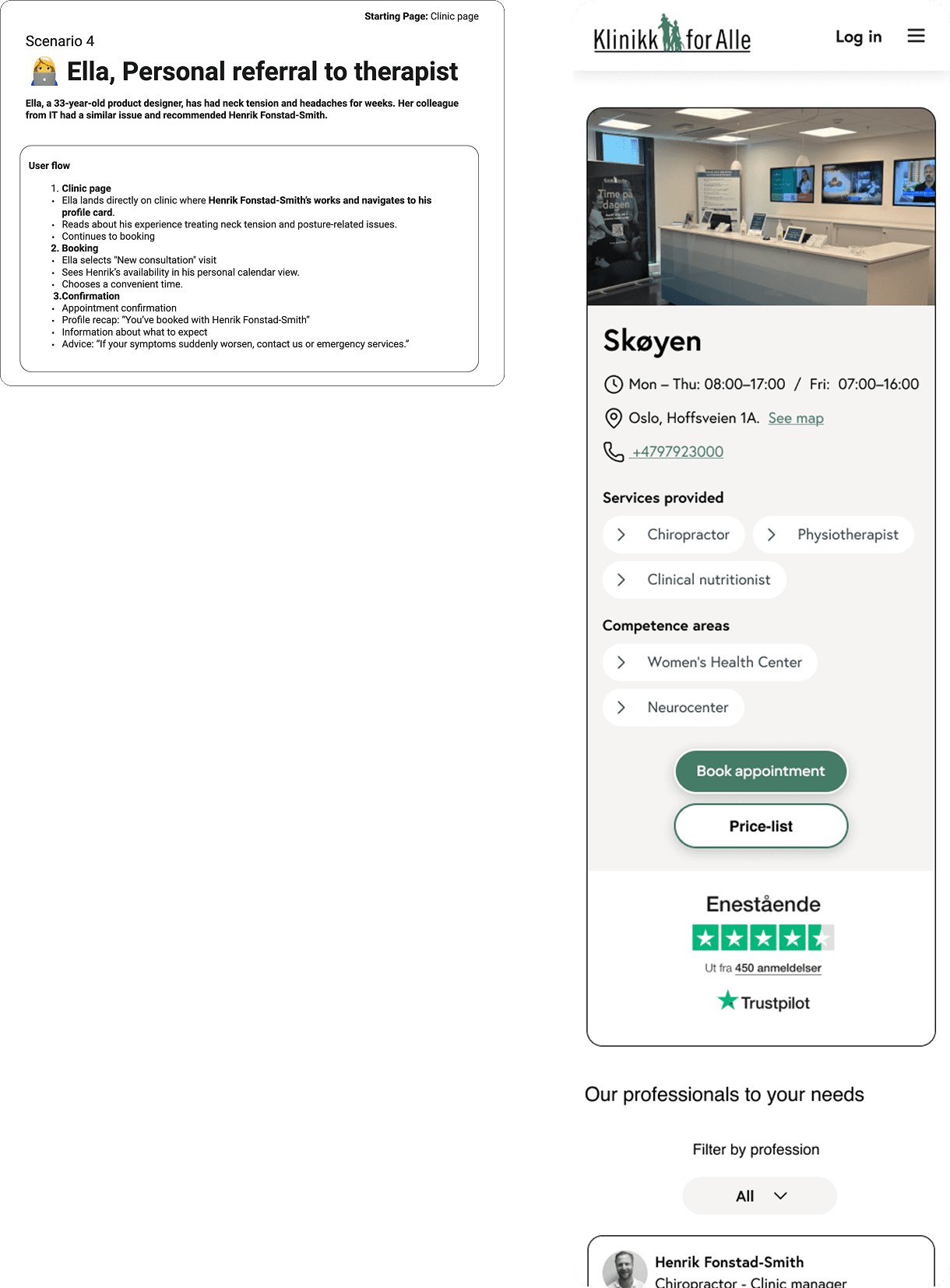
Defined core user flows (symptom-first booking, therapist recommendation, emergency care) that aligned business goals with patient behavior.
Turned stakeholder and user research into prioritized themes, driving an agnostic, scalable booking concept.
Led final UX/UI, visual and content strategy with leadership, delivering a fully tested prototype rated 4.5/5 by users.
Client
PMG
Industry
Healthcare
Service
UX/UI Design
Visual Design
Content
Duration
6 Weeks

Why it matters
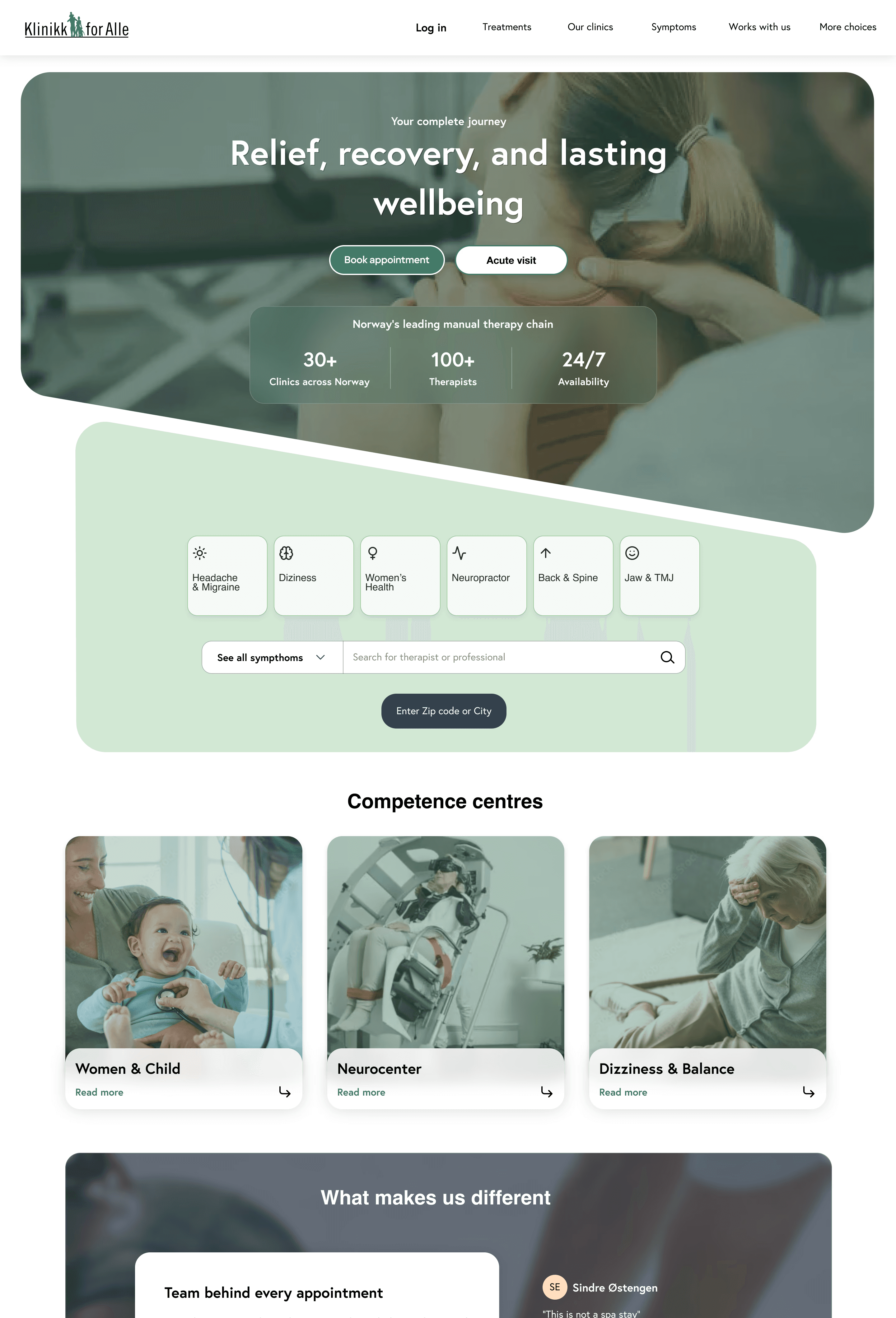
Redesigning the website and booking experience so it becomes a user-centric, business-supporting platform while aligning with upcoming brand updates and strategic expansion.
Klinikk for Alle, Norway’s largest private clinic chain, had grown rapidly across 40+ locations. But their digital booking experience hadn’t kept pace. It confused new users, buried their multidisciplinary offering, and lacked the flexibility to support different entry points - from first-timers with symptoms to those with therapist recommendations.
Immersing in reality
5 key insight themes that shaped our design direction
1. “I don’t know what kind of help I need - I just know what hurts.”
Most users couldn’t distinguish between professions (e.g., chiropractor vs physiotherapist). Their entry point was almost always a symptom or body part. This highlighted the need for a symptom-first, low-barrier booking experience.
2. Therapist differentiation is vague and untrustworthy.
Participants struggled to choose a therapist due to lack of visible expertise, specializations, or real profiles. Recommendations from friends carried more weight than the platform’s own info.
3. “First-time” vs “acute” vs “general appointment” - what does it all mean?
Terminology confusion around appointment types led to anxiety and booking hesitation. Users needed contextual help, not medical jargon.
4. Post-booking uncertainty reduces trust.
Many were unsure what would happen next after booking - whether they’d get an email, what to prepare, or how to cancel. They requested things like calendar integration, prep videos, and SMS confirmations.
5. New users and return users have different mental models.
First-time visitors expect guidance and reassurance. Returning patients expect faster flows, therapist re-selection, or repeat bookings - something the current system didn’t accommodate well.
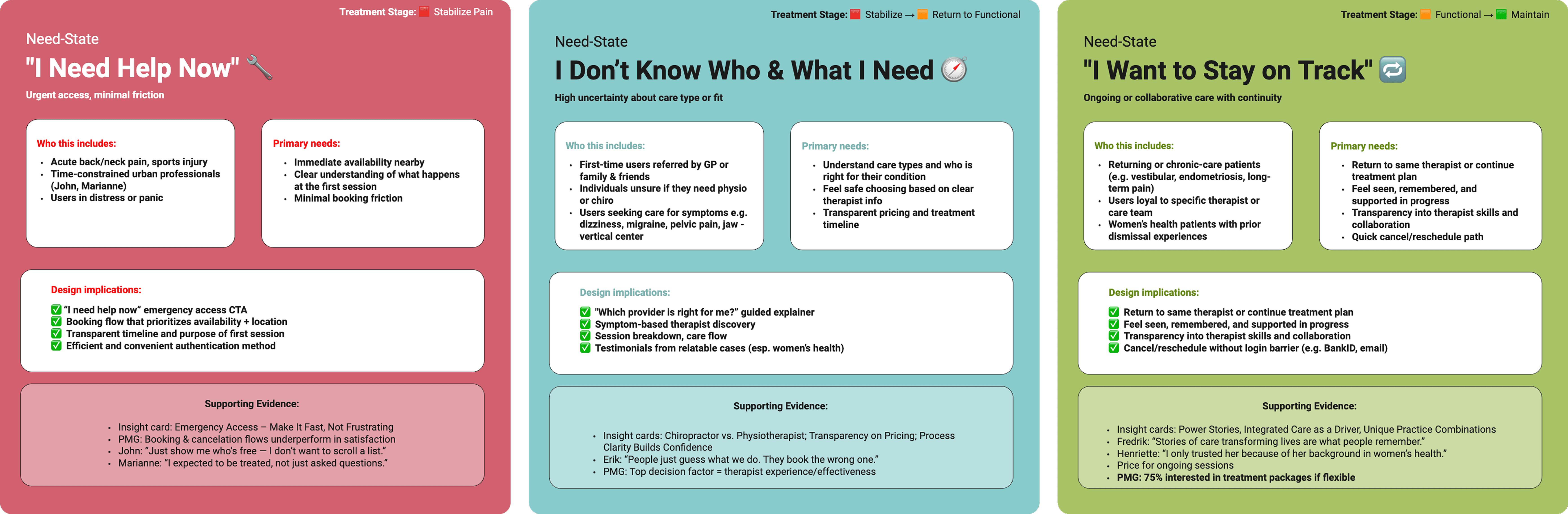
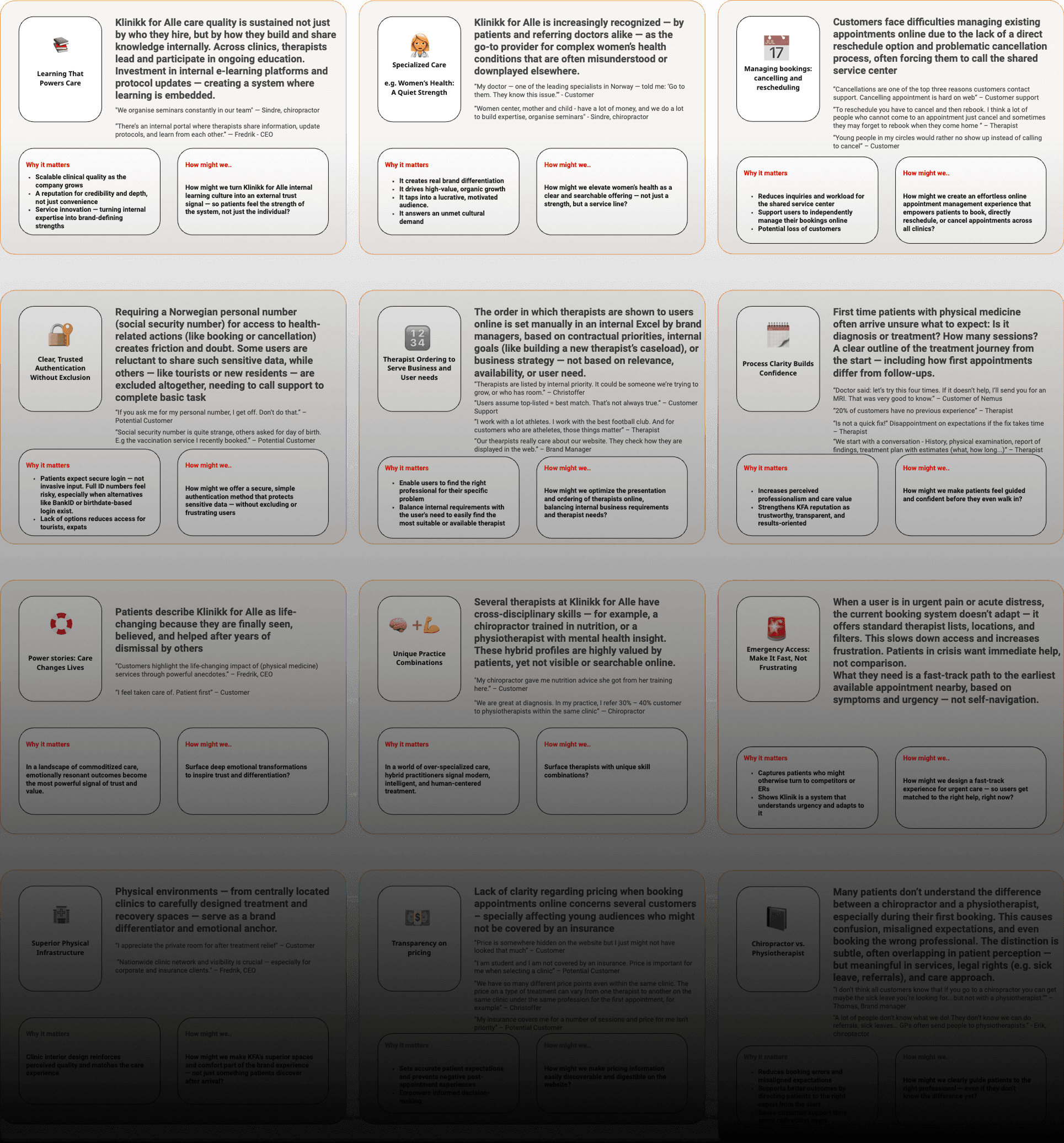
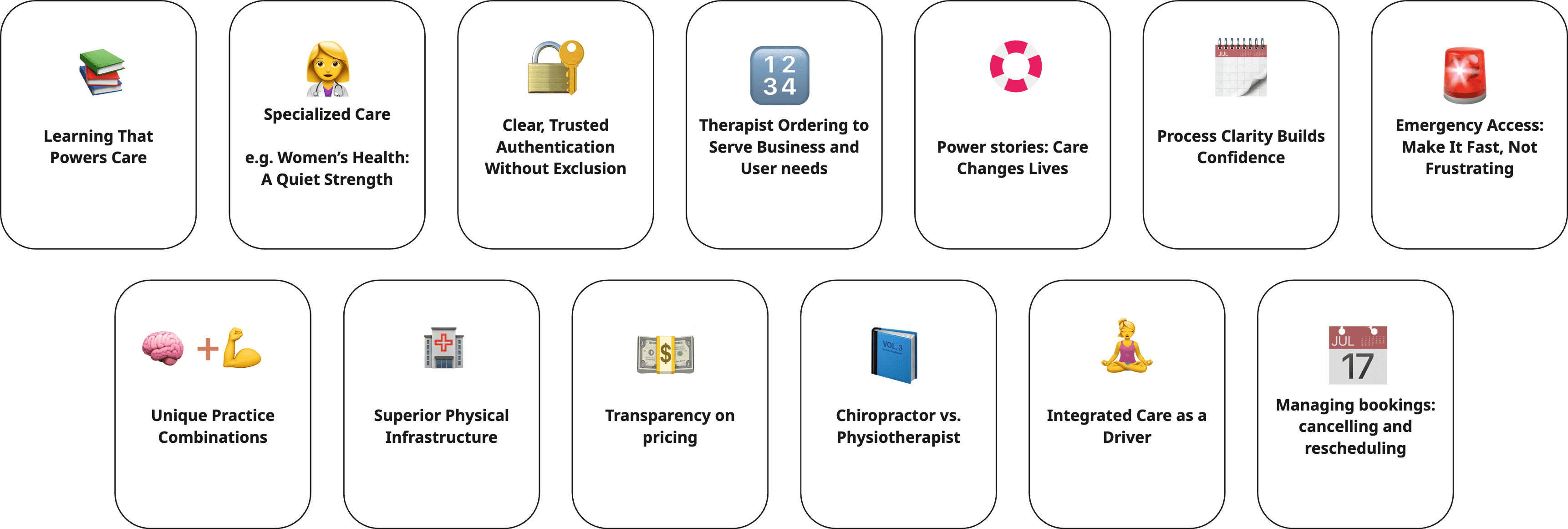
We mapped over 15 insight themes and used a relevance vs. impact matrix to prioritize
Experience premise
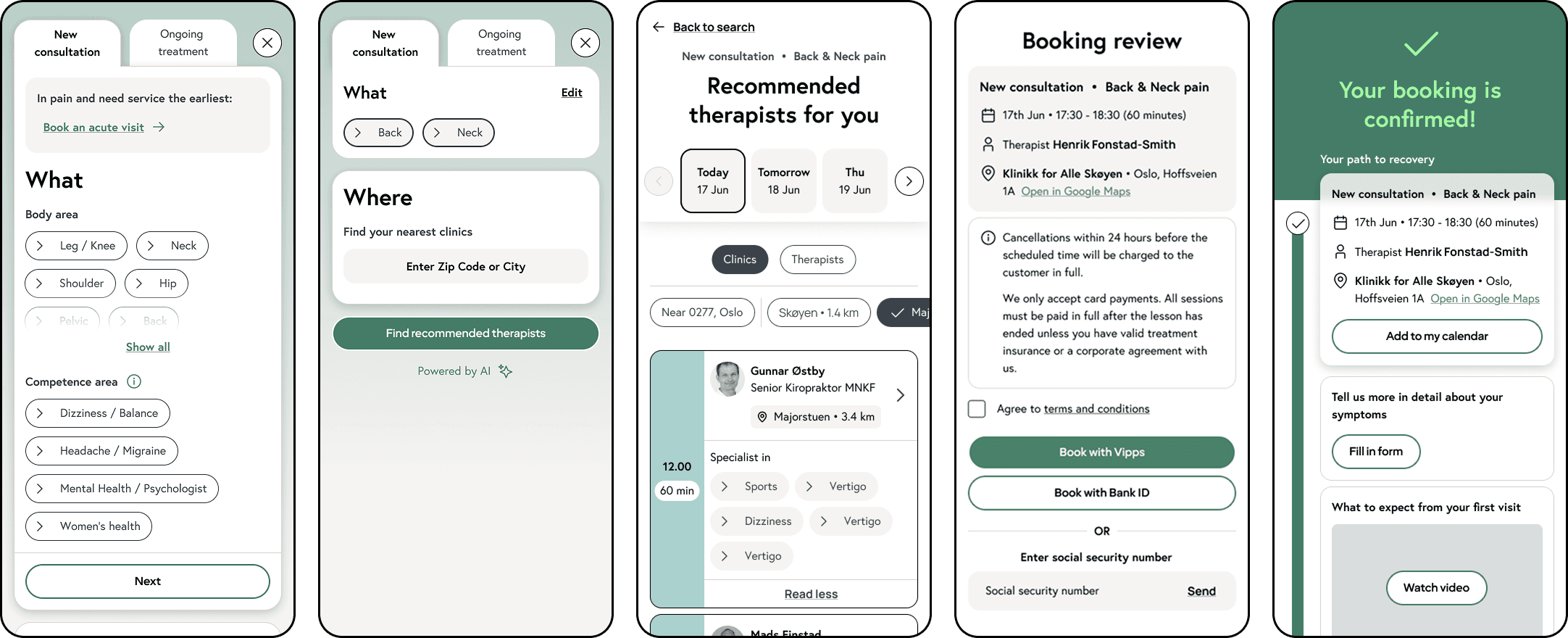
We reframed the booking system from service-first to problem-first
The concept was built around a simple idea:
“What do you know? Start there.”
Whether users come in with:
- A symptom like pelvic pain
- A recommendation for Henrik Fonstad-Smith
- An urgent need like emergency back pain
- Or just their location
...the system adapts.
Testing & validation
We tested flows with 8+ participants, across all entry points
Final Impact
Booking friction reduced across all tested scenarios
Designed to scale with new services and clinics
Improved discoverability and differentiation of professionals
Stakeholder alignment from operations to marketing
Future-proofed the platform for growth and rebranding